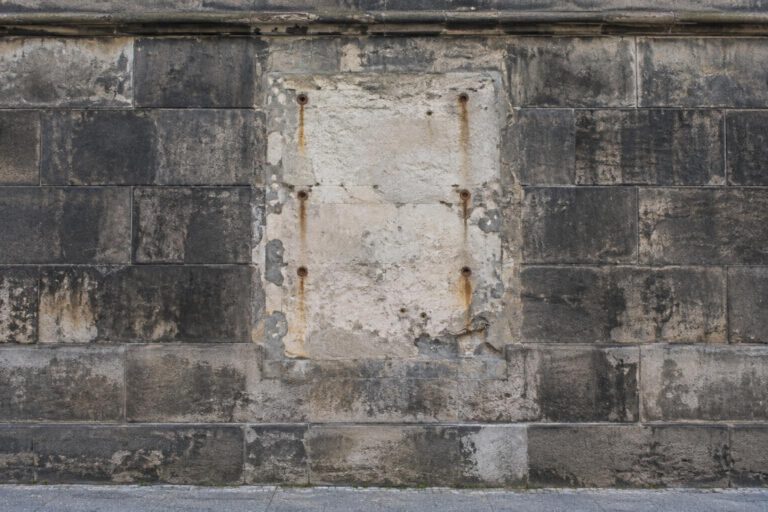
Twelve photographs of Berlin locations, accompanied by descriptions from passers-by: in Sophie Calle’s series ‘Die Entfernung’ (The Removal), images sit alongside memories of something that is no longer there. The starting point is the removal of GDR symbols after reunification. The camera documents the places that remain; the words bring back what escapes its gaze.
A work from this series, created in 1996, is the starting point for ‘Sophie Calle. Is It Better?’, announced as opening on 13 November at Hamburger Bahnhof – Nationalgalerie der Gegenwart in Berlin. The museum is turning 30. A work about disappearance, of all things, thus leads into its anniversary exhibition: what an institution preserves apparently cannot be separated from what is lost beyond its walls.
Looking back means making a selection
Sam Bardaouil and Lisa Hörstmann are curating the exhibition, bringing together six bodies of work from three decades. Photography, text, installation and video have been announced. This is not a comprehensive retrospective, but a selection whose starting point already lies within the context of the museum’s collection. The chronological connection is precise: ‘Die Entfernung’ was created in the same year that Hamburger Bahnhof opened as a venue for the Nationalgalerie.
Calle’s combination of image and text does not simply make memory tangible. It also brings out the different conditions on which it rests. A photograph can show what a place looks like after something has been removed. A description can identify what once stood there — and what remains of it in people’s memories. Together, the two do not necessarily produce a history free of contradictions. This is precisely where a possible counterpoint to a museum’s celebratory account of itself lies.
A hotel in the museum’s memory
‘Les fantômes d’Orsay’, from 2022, adds another prehistory. The expansive installation combines found objects, photographs and texts. Between 1978 and 1981, Calle explored the abandoned hotel in the former Paris railway station Gare d’Orsay. Room 501 became her retreat. Among other things, she collected room numbers, guest records and remnants of telephones: objects left over from the running of a hotel and the people who occupied it.
The Musée d’Orsay also documents the subsequent transformation: where her room had been, there was eventually a lift. A personal site of memory had become part of the museum’s infrastructure. In 2022, Calle returned to the site with her work. In Berlin, the installation is now to be shown again for the first time since it was created for the Paris museum.
The connection with Hamburger Bahnhof thus extends beyond their shared former association with rail travel. Both institutions were transformed from railway stations into art museums. Calle’s Paris work, however, directs attention to a different chronology: to the intervals before the institution, to temporary uses and inconspicuous things left behind. For Berlin, this raises the question of which stories might complement the official history of the museum. That does not yet mean the exhibition will answer it.
What is to remain in future
The new work for the anniversary should be distinguished from this look back. According to the museum, it is being created specifically for the occasion and is to enter the collection as a gift. Its title, materials and content are not specified in the announcements reviewed. It would therefore be premature to see it as a commentary on the history of Hamburger Bahnhof.
What is interesting, for now, is the institutional arrangement: the museum selects existing works while also admitting a new one into its future memory. Calle gains a permanent place within it. Whether her work confirms, expands or unsettles the institution’s narrative remains open. This very openness could offer the anniversary more than another memento.
The exhibition opens on 13 November 2026, in exactly two weeks. The museum’s current website gives 4 April 2027 as the closing date; earlier announcements had scheduled it to end on 2 May.
Original reviewed by the editors · 30 October 2026