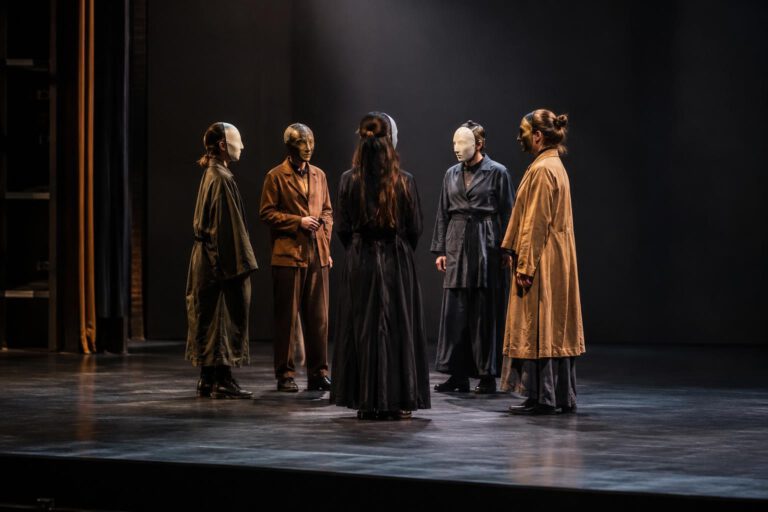
A theatre cannot be run from a desk alone. In the rehearsal room, a play is negotiated; in the programme, artistic visions meet; behind the scenes, schedules, staffing and finances have to align. From the 2028/29 season, a trio is set to take joint responsibility for these different aspects at the Münchner Kammerspiele: dramaturg Anja Dirks, director Antú Romero Nunes and actor Jörg Pohl.
The cultural affairs committee of Munich City Council approved the selection on 29 October. This is not yet the final decision: the full city council is due to vote on it on 25 November 2026. Until then, the trio are designated successors, not definitively appointed. The plan is for joint leadership over an initial five seasons; Barbara Mundel is to lead the theatre until the end of the 2027/28 season.
Three Perspectives, One Leadership Team
The model initially promises a different balance of perspectives from the conventional artistic directorship, in which one person holds overall artistic responsibility. Dirks brings dramaturgical and curatorial experience, Nunes a director’s perspective, and Pohl that of an actor and ensemble member. These skills plausibly complement one another — but that does not yet amount to a published organisational plan. Who will prepare which decisions in Munich, who will mediate in disputes and who will be accountable for which operational matters has not yet been publicly set out in detail.
This is precisely the practical question at the heart of collective leadership. A team can distribute responsibility and test decisions against several people’s experience. But it must also establish how differing judgements become a programme, how quickly decisions can be made day to day, and who publicly takes responsibility for the outcome. Equal standing is an agreement about power, not an automatic guarantee of consensus.
What Basel Teaches — and What It Does Not
The Munich proposal has not emerged from a vacuum. Dirks, Nunes and Pohl already work together in the drama directorate at Theater Basel. From the 2026/27 season, the drama department there is to continue under a three-person leadership team; dramaturg Inga Schonlau was previously also part of the team. The Basel experience is therefore an important point of reference, but not a ready-made organisational model that could be transferred unchanged to Munich.
The theatres themselves differ. Basel is a theatre encompassing opera, drama and dance; the three lead its drama department within a larger theatrical structure. The Kammerspiele is a municipal drama theatre with its own ensemble history and its own political and administrative conditions. A joint leadership team there also needs clear lines of communication with administration, technical departments and the city. Basel’s practice can offer experience; it does not automatically answer the question of how responsibilities will be allocated in Munich.
The Art of Decision-Making
The three backgrounds point to a potential strength of the team: directing, dramaturgy and acting meet not only within an individual production, but at the earlier stage of asking what kind of theatre the institution should be. A programme can thus emerge more directly from engagement with the ensemble and the material. Yet it is impossible to make any reliable prediction before the trio takes office about which themes, aesthetics or working methods they will actually establish.
Nor do the Kammerspiele enter this transition as a blank slate. The theatre combines a long ensemble tradition with an ambition to shift artistic forms and social perspectives. The incoming leadership has announced its intention to develop this tradition inclusively and with international perspectives. That is a statement of intent, not yet evidence of how it will translate into rehearsal schedules, casting or access to the theatre.
The decisive test of the three-person model will therefore be less about whether three names appear on the leadership plaque. What matters is whether shared responsibility becomes visible in the theatre’s daily life: in clearly defined responsibilities, productive collaboration with the ensemble and decisions that do not go round in circles. What Munich is initially adopting from Basel is, above all, an experience — that a drama theatre can be led jointly from different professional standpoints. How this will develop into a distinct Munich practice remains open.
Original reviewed by the editors · 3 November 2026