A further performance of Peter Shaffer’s ‘Amadeus’ is scheduled at Staatsschauspiel Dresden for 26 October. According to the theatre, the premiere took place on 17 October – a discrepancy with the story pitch, which gives 26 October as the opening night. Daniela Löffner directs. The question Shaffer’s play poses remains a compelling one for today’s cultural sector: who is recognised as a genius, and who decides?
Admiration that turns into rivalry
Shaffer pits the court composer Antonio Salieri against the younger Wolfgang Amadeus Mozart. One has position and prestige; the other has a talent that Salieri finds overwhelming. From this, the play develops not a dispassionate portrait of a musician, but a drama about recognition, wounded pride and the notion that artistic success ought to follow a just order. The historical rivalry the play depicts is not, however, evidence of an actual conspiracy: ‘Amadeus’ is a play, not a documentary.
Since its world premiere at London’s National Theatre in 1979, the work has become one of Shaffer’s best-known plays. Its tension arises from a contradiction: Salieri is not simply the talentless man beside the genius. He knows the rules of the profession and can hold his own within it; that is precisely why his encounter with Mozart affects him so deeply. The play connects the question of exceptional talent with that of the institutions that support, assess and give visibility to art.
An ensemble, several musical voices
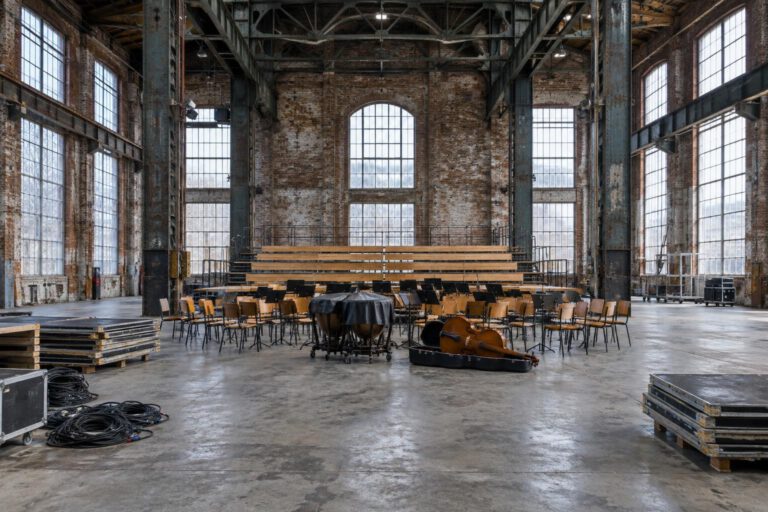
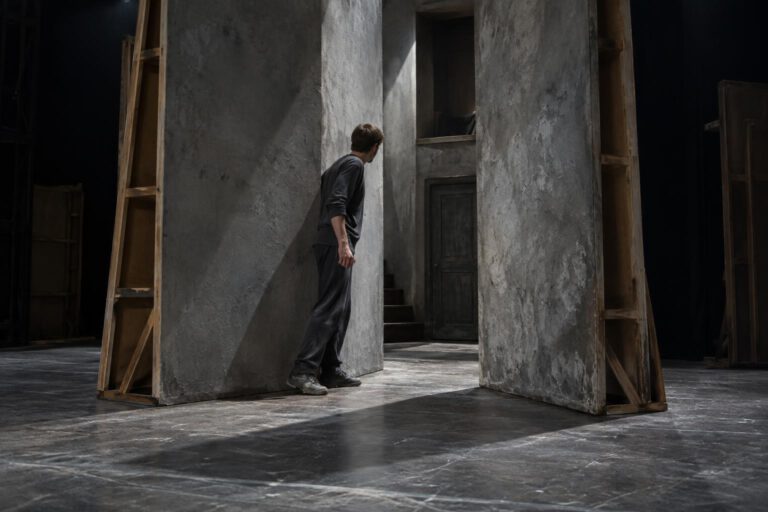
For the Dresden production, the Staatsschauspiel lists eleven performers, including Nahuel Häfliger, Jonas Holupirek, Sven Hönig, Friederike Ott and Simon Werdelis. Claudia Kalinski designs the set, while Kalinski and Daniela Selig are responsible for the costumes. Matthias Erhard is responsible for the music, Peter Lorenz for the lighting design; Kerstin Behrens is the dramaturg. Female musicians expand the ensemble with vocals, cello, keyboard, electronics, percussion and piano.
The theatre describes the production as a portrait of an artist and a panorama of the Viennese court in the late 18th century. How this concept unfolds on stage cannot be judged from these details alone. Nor should any particular argument about today’s cultural sector be attributed to the production unless the team has articulated it themselves.
The old question in today’s cultural sector
The play nevertheless offers an opportunity to examine working conditions: creative work rarely takes place outside relationships of dependence. Who receives attention, who has access and resources, whose work is considered original – and who remains in the shadows? Shaffer’s conflict concentrates these questions in two characters whose strengths and opportunities are unequally distributed. A contemporary production can shift the emphasis within this dynamic; where Löffner and her team place their accents remains a question for the performance, not its advance publicity.
‘Amadeus’ can be seen at the Schauspielhaus of Staatsschauspiel Dresden. The theatre lists a performance on 26 October in its programme; the production’s premiere has already taken place.
Original reviewed by the editors · 26 October 2026