A film retrospective begins long before the first beam of light hits the screen. Someone has to decide which films tell the story of an era or a director’s distinctive style; then comes the task of finding usable prints, establishing screening conditions and giving audiences a way in. The joint Robert Aldrich retrospective organised by the Viennale and the Austrian Film Museum continues this work in Vienna beyond the festival itself: the Viennale ends on 3 November, while the retrospective at the Film Museum runs until 30 November.
A print is more than a carrier
Aldrich’s films often have a more prominent presence in cinemas than his name: “Kiss Me Deadly” (1955), “What Ever Happened to Baby Jane?” (1962) and “The Dirty Dozen” (1967) are among the works with which he roughened the edges of genre conventions and exposed the contradictions of Hollywood cinema. The retrospective covers almost his entire body of work and promises rare film prints. That wording alone points to a crucial curatorial question: what can actually be shown — and in which version and format?
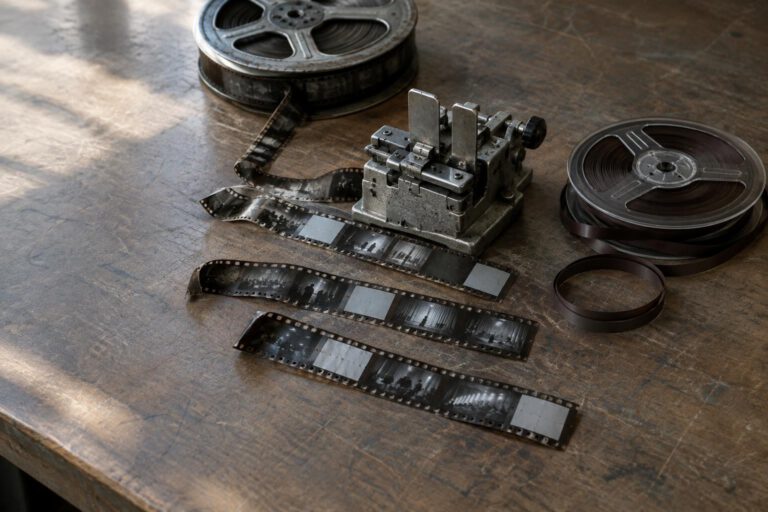
A film print is not simply an interchangeable container for a title. It bears traces of its production and use, and may differ from other prints in image stability, colour, contrast and condition. An archive must therefore inspect the material and weigh up whether screening it is justifiable. Nor is the decision for or against digitisation merely a choice between old and new. The Austrian Film Museum describes a needs-based approach: digitisation can enable access and preservation, while certain parts of the collection are also to be preserved and screened in their analogue format. The publicly available programme information does not specify, for every screening, which print or copy will be used for each Aldrich film.
From the collection to the cinema
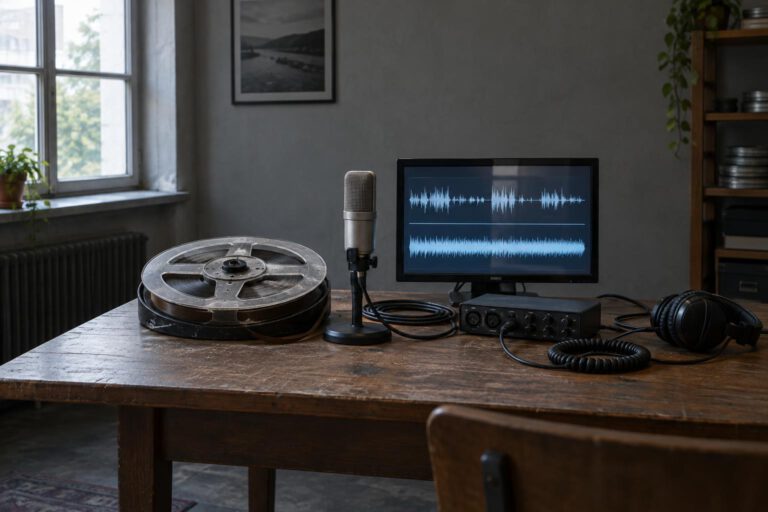
The practical work goes beyond locating a print. Material has to be transported, inspected and prepared for screening; equipment and staff must be suited to the format in question. Versions preserved or restored digitally raise different but equally concrete questions: which version is being shown? How will it be preserved in the long term? And how transparent will the treatment and provenance of the material remain?
These are not minor technical details. They influence what audiences get to see and how a film can be placed in its historical context. Restoration does not mean uncovering a supposedly definitive form. It is a reasoned process of working with surviving material — involving decisions that should be documented and open to scrutiny. Archives must reconcile several responsibilities: preservation, research and public access. Not every work can be safeguarded or presented in the same way.
Interpretation is part of the programme
Ultimately, a film season also becomes a narrative through its selection. In Aldrich’s case, the journey leads from the western “Vera Cruz” (1954), through the film noir “Kiss Me Deadly”, to later works such as “Ulzana’s Raid” (1972). The selection can reveal recurring concerns: power relations, violence and the friction between popular forms and a critical view of the world. This is not something a film brings with it on its own; it also emerges through its proximity to other films in the programme, introductions, texts and discussions.
The retrospective’s extended run allows for a different rhythm from that of the festival: individual screenings are spread over several weeks rather than concentrated within the Viennale’s compressed schedule. The retrospective thus becomes not only a tribute to a director, but an invitation to read film history comparatively. For that to succeed, it takes more than a slot in the programme. It takes material that can be screened, people with the expertise to project it, and interpretation that makes clear why these particular films belong together.
Original reviewed by the editors · 26 October 2026