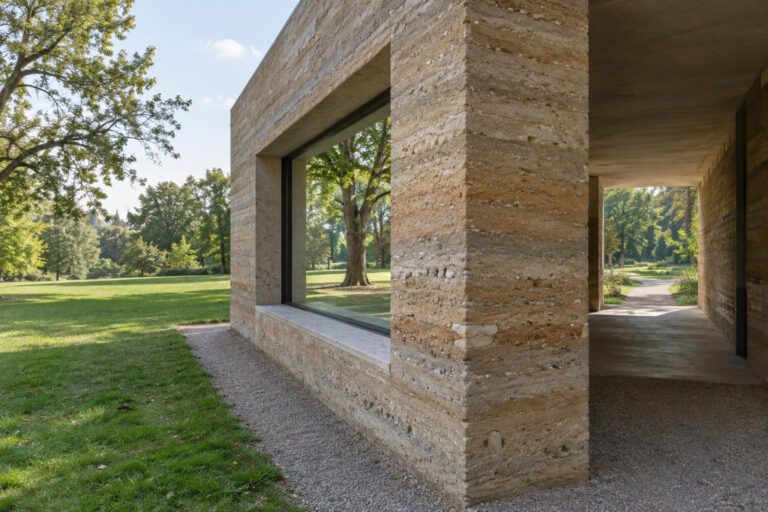
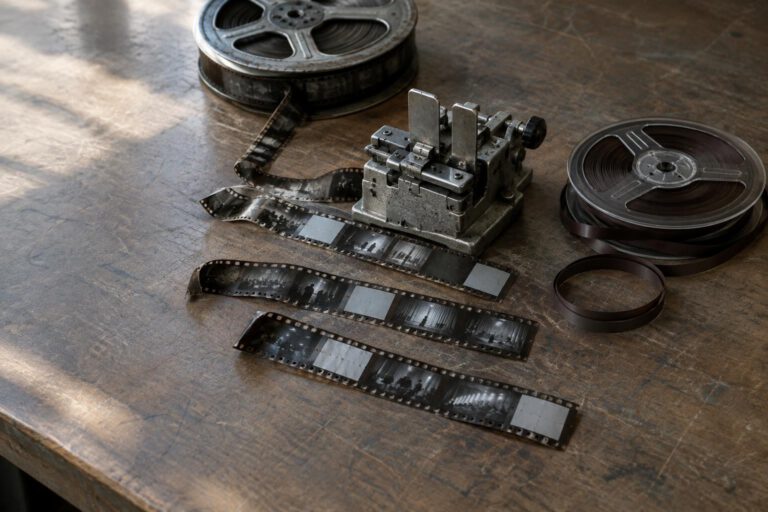
A building does not reveal itself at a glance. We approach it, enter, linger or move on; light and materials change with our position. Wim Wenders’ ‘From Inside Out – Die Architektur von Peter Zumthor’ (From Inside Out – The Architecture of Peter Zumthor) takes precisely this as its starting point: the 3D documentary seeks not merely to depict spaces, but to bring their depth into the cinema. It is scheduled for release across Germany on 26 November 2026.
Yet the more convincingly the camera creates a sense of physical proximity, the more pressing one question becomes: does it lead us into the architecture – or does it primarily guide our gaze? This is not an objection to cinema, but its productive tension. A film can open up spaces. But it cannot replace the freedom to find our own way within them.
Depth is not movement
Wenders has been working with stereoscopic cinema since ‘Pina’ and ‘Anselm’. For his portrait of the Swiss architect Peter Zumthor, the third dimension is more than a visual attraction: it promises to convey volume and distance as a bodily experience. According to the production team, the film was made over 14 years; its running time is 114 minutes.
The promise is seductive. Architecture consists not only of façades or floor plans, but of the relationship between body and space: a threshold that slows our step, a wall that holds back light, a ceiling that creates intimacy or expansiveness. The camera can make such relationships visible. 3D can emphasise the distance between foreground and background, give surfaces a more palpable presence and direct attention towards transitions.
But space is more than depth. Those who enter a building decide for themselves where to look, how long to stay and whether to turn around. In a film, the camera determines the framing, the duration and the next viewpoint. Even a seemingly floating movement remains a choreographed movement. The audience is given not the space itself, but a carefully organised encounter with it.
The camera as architecture critic
This is not a weakness that technology could remedy. Cinematic mediation always involves selection. Even a static image arranges foreground and background; a tracking shot allows that arrangement to unfold in time. It can make a door appear as an invitation or a boundary, a surface as mere texture or as resistance. To film is to interpret.
Wenders’ title suggests a movement from inside to outside. Here, his cinematic perspective intersects with Zumthor’s well-known attentiveness to the experience of interiors. Yet a camera gliding through a building is no more neutral than one that remains outside it. It makes certain routes seem natural and renders others invisible. The very impression that we can move freely within the image can easily make us forget this guidance.
Here lies the format’s strength – and its limit. An architectural film can sharpen our attention to what we often pass through without a second thought in everyday life. It can prompt reflection on how built space shapes behaviour and perception. Yet it cannot fully convey either the chance discoveries of our own route or a place’s resistance to us. The cinema remains a cinema; the movement is offered, not chosen for ourselves.
A real place, not a substitute for a visit
The question can be explored further through Zumthor’s latest point of reference in Riehen. The Fondation Beyeler will unveil its extension by Atelier Peter Zumthor in stages in autumn 2026; the expanded ensemble is scheduled to open fully in January 2027. The site is thus both architecture in use and an ongoing transition – not simply a finished image.
A film can make this distinction productive if it does not claim to replace a visit. The real building ties perception to our own bodies and to specific conditions: the journey there, our pace, the decision to cross a threshold or stand still. In the cinema, by contrast, space becomes a sequence. This is not an inferior form of access, but a different one.
Freedom begins with an awareness of guidance
One argument against the suspicion that 3D narrows perception is that every form of seeing is already framed. Architecture itself also guides us: through doors, axes, light and materials. A film can make this guidance visible and thus open to discussion. Its direction need not be paternalistic; it can be an invitation to look more closely.
What matters is whether we confuse the cinematic movement with the building itself. Wenders’ portrait gives architecture a form that can create proximity without guaranteeing presence. The camera guides our gaze – and precisely therein lies an opportunity: not to surrender our own perception, but to recognise the conditions that shape it. After the film, the real test begins outside, in the space we must enter ourselves and read in our own way.
Original reviewed by the editors · 30 October 2026