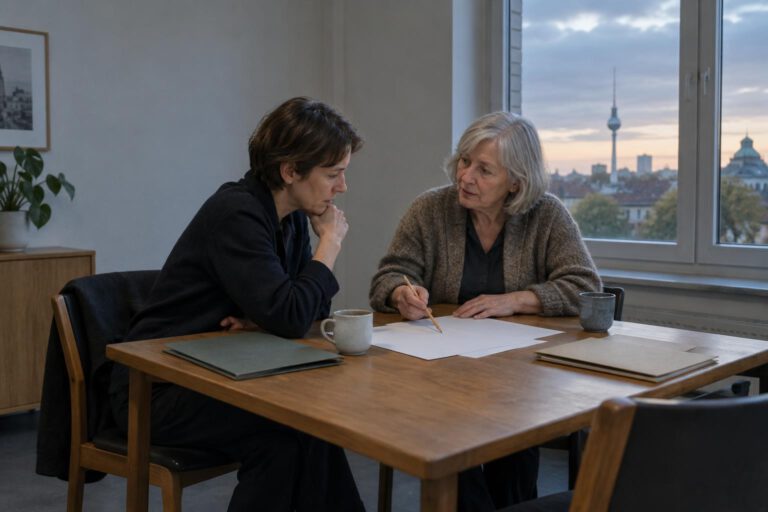
The ninth round of the mentoring programme ‘Frauen in Kultur und Medien’ (Women in Culture and Media) began in Berlin on 19 October. A jury selected 26 participants from more than 250 applications. Over the next six months, they will be mentored by experienced figures from culture and the media. The German Cultural Council is thus continuing a format designed to share professional experience, provide contacts and offer guidance. Yet the crucial question extends beyond the programme: who ultimately chooses who leads an institution?
Mentoring can bring the next career step into sharper focus and open doors to networks. But it can neither create a post nor replace a selection process. Responsibility for these lies with institutions, their governing bodies and the panels that appoint their leaders.
Helping people help themselves – with limited reach
The programme is aimed at women with professional experience who aspire to a leadership position or want to raise their profile in the sector. Alongside one-to-one mentoring, it includes seminars and networking events. According to the German Cultural Council, the ninth round is funded by the Federal Government Commissioner for Culture and the Media; it is organised by the German Cultural Council.
The benefits of such a format are initially felt at an individual level: an experienced mentor can discuss application strategies, offer insights into institutional processes and facilitate contacts. A network can also help participants share experiences for which there is little room in everyday working life. These are credible forms of support – but they are not evidence that mentoring alone leads to an appointment.
The German Cultural Council points to positive experiences from previous rounds. The sources examined here do not include an independent evaluation tracking how many participants subsequently secure leadership posts and what role mentoring plays in this. The number of applications should therefore not be confused with evidence of an impact on careers. What it demonstrates, first and foremost, is interest and demand.
Progress is not parity
Developments in cultural institutions cannot be captured by a single figure. In its report ‘Es geht voran’ (Moving Forward), the German Cultural Council brings together data and contributions on different sectors. Its assessment finds that women are taking on leadership responsibilities more frequently than ten years ago, but that their representation still falls short of their high proportion of the workforce. Earlier analyses by the German Cultural Council also show differences between types of institution: according to a summary published in 2023, the proportion of women leading art museums rose from 30 per cent in 2014 to 42 per cent in 2021. Such figures describe a specific field and period; they do not support sweeping statements about theatres, orchestras, publishers or cultural administrations.
This also makes the question of access more complicated than simply ‘supporting more women’. Careers depend on a range of resources: paid or unpaid work experience, financial security, flexibility with time and the ability to reconcile professional commitments with caring responsibilities. In an article about the programme, ‘Politik & Kultur’ describes balancing work and care, and reservations about female applicants, as recurring themes. These are observations from the programme’s practical experience, not a diagnosis substantiated equally for every institution.
Who sets the rules?
When filling a leadership post, it is not only who applies that matters. How the person specification is worded, which experience is considered relevant, who sits on a search or appointments committee and how its decision is justified are also crucial. Responsibilities vary: depending on their governance and legal status, public institutions fall under the responsibility of federal states, municipalities or other public or non-profit bodies. Foundations and private institutions have their own procedures. A mentoring programme run by the federal government or a nationwide association cannot centrally control these decisions.
This is precisely where individual support reaches its limits. It can strengthen participants’ applications, but cannot remove structural barriers on its own. For that to happen, institutions would need to make their procedures transparent, set out criteria at an early stage and examine whether the composition of their selection panels unnecessarily narrows the range of perspectives. Working conditions after appointment are part of this too: a leadership career offers little accessibility if it can only ever be reconciled with excessively long hours or constant availability.
The ninth round is therefore less an answer to the question of who will lead cultural institutions in future than an opportunity to ask it more precisely. Mentoring can help prepare individual paths and facilitate contacts. Whether these possibilities translate into fair opportunities is decided where posts are advertised, profiles defined and candidates selected.
Original reviewed by the editors · 26 October 2026